Golf Club Software in the UK Is Holding the Industry Back
UK golf clubs are stuck on outdated software that can't automate follow-ups, integrate systems, or match what hotels and US courses already do. Here's what needs to change.
By James Wilkinson, Founder of Albatross Digital. James has spent over a decade building digital solutions for golf clubs across the UK.

The software most UK golf clubs rely on is not fit for what the industry now needs. It was built for tee sheets and handicaps, not for communications, follow-ups, or commercial operations. And it's costing clubs revenue every week.
I've lost count of the number of times I've sat across a table from a golf club general manager, listened to a genuinely good idea, and had to say, "I love it. But your current setup can't do it."
Not because the idea was unrealistic. Not because the budget wasn't there. Because the golf club software the club was running on simply wasn't built for what they needed.
It happens constantly. And it's been happening for years.
The conversations that never change
A GM wants to send new members a proper onboarding sequence. Not one welcome email. A series. A booking guide on day one. An introduction to the pro shop team on day three. What's on this month at the two-week mark. A check-in at week four. Five touchpoints over the first 30 days, each one personalised to the membership type. The membership system knows who joined and when. But it can't trigger a multi-step email sequence. The email tool could send the sequence, but it doesn't know who joined. There's no connection between the two. So nobody gets any of it.
A club ran 40 society days last year. 15 of those organisers haven't rebooked. The GM wants to email each one with a personalised message referencing their last event, the date, the package, the feedback. All of that data exists somewhere in the club's systems. But there's no way to pull it together, segment those 15 people, and trigger an automated re-engagement sequence. So the GM does nothing, or spends an afternoon writing individual emails from memory.
A visitor has played four rounds at the club over the summer. They're clearly keen. Nobody has ever suggested membership. The tee sheet knows how many times they've played. The EPOS knows what they've spent. But no system connects "four visits" to "send this person a personalised membership calculation." That visitor joins somewhere else, and the club never even knew they were a prospect.
The club has full members, social members, juniors, flexible members, and a waiting list. The GM wants to send different newsletters to each group. The membership categories live in the club management system. The email tool doesn't know who belongs to which category. Every time the GM wants to send a targeted email, someone has to export a list, clean it, and import it into a separate platform. It takes an hour. So it happens once a quarter instead of once a fortnight.
Four different GMs. Four completely reasonable ideas. All of them blocked by the same problem.
The GM's idea was simple every time. The technology made it complicated. And that story repeats itself at every club I work with.
Why golf club software doesn't integrate with anything
Every one of those examples fails for the same reason. Golf club systems don't talk to each other.
The tee sheet doesn't talk to the email system. The membership database doesn't talk to the website. The booking engine doesn't share data with the marketing tool. The EPOS knows what a member spent in the bar last month, but that information lives in a completely separate universe from the system that's supposed to be managing member communications.
In the wider technology world, this was solved years ago. Open APIs. Webhooks. Native integrations. Zapier connections. The ability for one system to pass information to another without a human being copying and pasting between spreadsheets.
In golf, most of that doesn't exist. Or if it does, it's locked behind custom development that costs more than the software itself.
Ask any developer who's worked with golf club software APIs what it takes to do something simple — send a thank-you email the day after a visitor plays — and they'll tell you. It's not simple. The booking data lives in one system. The customer email address lives in another. Getting them to talk to each other, automatically, reliably, without someone manually exporting and importing a spreadsheet every day, requires custom work that most clubs simply don't have the budget or the technical resource for.
In hospitality, this kind of automation is standard out of the box. A hotel can configure a post-stay email sequence in an afternoon. A restaurant can set up a return-visit offer in minutes. The tools are built for it.
Golf club software wasn't. And until that changes, every "simple" automation idea a GM has will hit the same wall.
That's not a criticism of the people who built these systems. They were built to manage tee sheets, process bookings, and handle handicaps. They're good at those things. But the industry has moved on and the demands on a golf club's commercial operation have outgrown what these tools were designed to do.
I've seen clubs running five or six different platforms. Tee sheet. Membership database. EPOS. Email marketing. Website CMS. Accounting software. None of them connected. The GM is the integration layer. They're the one logging into six different dashboards, pulling data from each one, and trying to build a picture of what's actually happening at their club.
That's not a technology strategy. That's a workaround. And it's been normalised because the industry has never known anything different.
Why golf club email marketing is still stuck in 2009
Go and look at the emails your club sends. Now compare them to the last email you got from a hotel, an airline, or a decent restaurant.
I don't say this to be harsh. I say it because your members and visitors notice. They live in a world of beautifully designed digital experiences. They book holidays on slick apps. They get personalised recommendations from every retailer they buy from. Then they get a plain text email from their golf club that looks like it was written in Outlook in 2009.
Because it was.
Most golf clubs don't have access to a modern email builder. Drag-and-drop design tools, reusable templates, mobile-responsive layouts. Things that every Shopify store and every local restaurant have had for a decade. Golf clubs are still copying and pasting into a basic email client, or wrestling with a clunky template system that nobody on the team knows how to update.
The same applies to forms. Enquiry forms on golf club websites are some of the worst user experiences on the internet. Tiny text fields. No mobile optimisation. No confirmation message. No automated response. The person fills it in and waits. And waits. And wonders if it even went anywhere.
I've seen clubs lose membership enquiries because the form submission went to an email address nobody checks. Not because anyone was negligent. Because the system was set up three years ago by someone who's since left, and nobody thought to check where enquiries were actually going.
What every other industry figured out years ago
Book a hotel room at any decent chain and watch what happens. Before you arrive, you get a pre-stay email offering an upgrade, early check-in, a restaurant reservation. After checkout, you get a thank-you email, a review request, and a personalised return offer. If you don't come back within six months, you get a win-back campaign. If you visit three times, you're automatically enrolled in a loyalty programme. All of it is automated. All of it is triggered by data the hotel already has. The guest does nothing. The staff do nothing. The system handles it.
Hotels have had this for years. Restaurants use it. Fitness chains use it. The local independent coffee shop on my street sends me a birthday discount because Shopify told it to.
Golf clubs, processing thousands of visitors a year and managing memberships worth millions in aggregate, are sending plain-text emails from Outlook.
That's not a technology problem in the sense that the technology doesn't exist. It's that the technology the golf industry has chosen to build around was never designed to do any of this. Tee sheets manage bookings. Club management systems manage handicaps and competitions. Nobody built the communications and commercial layer. So it doesn't exist.
UK golf club technology vs the US: the gap is widening
I wrote a LinkedIn post last year asking why UK golf clubs are still booking rounds like it's 2010 while US courses price like airlines. It struck a nerve.
In the US, companies like Sagacity are running AI-powered phone agents that answer calls and book tee times 24/7. Dynamic pricing adjusts rates based on demand, weather, and booking patterns. CRM platforms built specifically for golf courses integrate natively with tee sheets, EPOS, and marketing tools. Courses are running automated post-round follow-ups, lapsed-visitor win-backs, and personalised upsell campaigns as standard.
In the UK, most clubs would need three separate systems and a developer to achieve any one of those things.
This gap isn't closing. It's widening. And it's not because UK clubs lack ambition. Every GM I speak to has ideas for how they'd communicate with members and visitors if they could. The constraint is always the same. Their current tech stack can't do it.

The cost of outdated golf club enquiry management
Every one of these gaps has a revenue consequence. The welcome email that never gets sent means a new member doesn't feel connected from day one. Research consistently shows that the first 90 days of membership are when engagement is won or lost. Silence during that window is how clubs lose members before they've played ten rounds.
The systems that don't talk to each other mean a GM spends hours every week compiling reports by hand. I've spoken to GMs tracking hundreds of leads on a spreadsheet because their membership system has no pipeline, no follow-up tracking, and no way to see what's gone cold.
The integration gaps mean a society organiser fills in a form on Friday afternoon and doesn't hear back until Tuesday. By then they've booked somewhere else. Not because your club isn't good enough. Because someone else replied first.
And the lack of smart automations means a visitor plays four rounds at your club over a summer and nobody ever suggests membership. A lapsed regular stops coming to the bar and nobody notices. A member's renewal date passes without a single reminder. Revenue walks out the back door quietly, week after week.
The uncomfortable question
The golf industry is experiencing record participation. Over 5.75 million scores were submitted to the World Handicap System in the first half of 2025. Rounds played are at their highest level in a decade. The demand has never been stronger.
So why are so many clubs still struggling to convert that demand into revenue?
I think the answer is that the technology golf clubs rely on was built for a different era. An era when a tee sheet was the most important digital tool a club needed. When email marketing meant a quarterly newsletter. When "CRM" was a contacts list in Outlook.
Hotels moved on. Airlines moved on. Even the local gym moved on. Golf hasn't. And the clubs that keep waiting for their existing technology to catch up will keep having the same conversations I've been having for the last ten years.
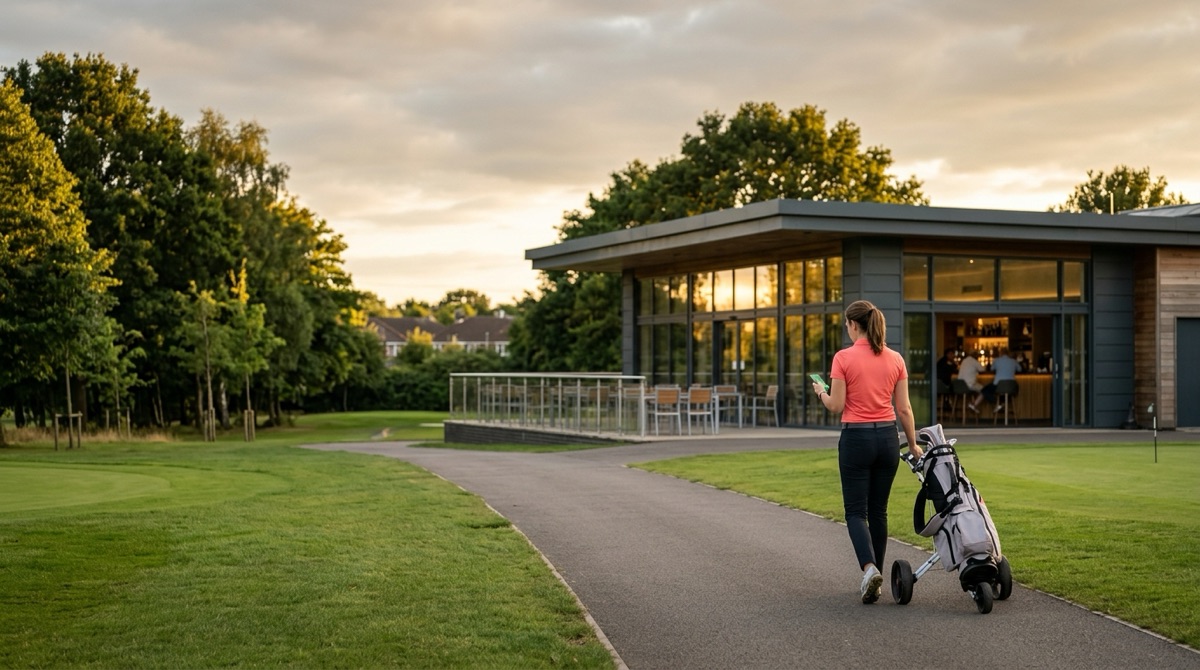
What golf club communications should look like in 2026
A new member joins and immediately receives a beautifully designed welcome sequence. Five emails over their first month. Their name. Their membership type. An invitation to book their first round. An introduction to the team. A prompt to book a lesson with the pro. All automated. All branded. All happening without anyone on the team lifting a finger.
A society organiser fills in a form at 5pm on a Friday and gets an instant, personalised response confirming their enquiry has been received, with a quote attached. The club follows up automatically three days later. And three days after that. The day after the society plays, the organiser gets a thank-you email with a rebooking incentive for next year. The GM can see every open society enquiry on a single screen.
A visitor plays a round, and the next morning receives a thank-you email with a return offer and a link to leave a Google review. Three days before their next booking, they get a pre-visit email with directions and a prompt to book a buggy if they haven't already. After their fourth visit, the system sends them a personalised membership calculation showing what they'd save. Their details are captured in a database that grows automatically.
A member who hasn't visited the restaurant in three months gets a reason to come back. A regular at the bar gets a quiet loyalty reward. A member who used to play every week but hasn't been in for a month gets a check-in from the club. A member whose renewal is 60 days out gets a warm reminder. At 30 days, a firmer one.
A committee chair logs into a dashboard and sees, in real time, how many enquiries came in this month, what the conversion rate looks like, which channels are generating the most value, and how many members are at risk of not renewing.
None of that is futuristic. Hotels do all of it. Fitness chains do most of it. Even a restaurant with 200 covers a night does the guest follow-up and the loyalty programme. And none of it is readily available from the golf club software most UK clubs are currently using.
That gap between what should be possible and what actually is? That's the gap the golf industry needs to close.
I'm tired of telling good people with good ideas that their setup can't do it.
Something needs to change.
Ready to capture more enquiries?
Book a free 15-minute demo and see how Capture works for your club.
Book a free demo